
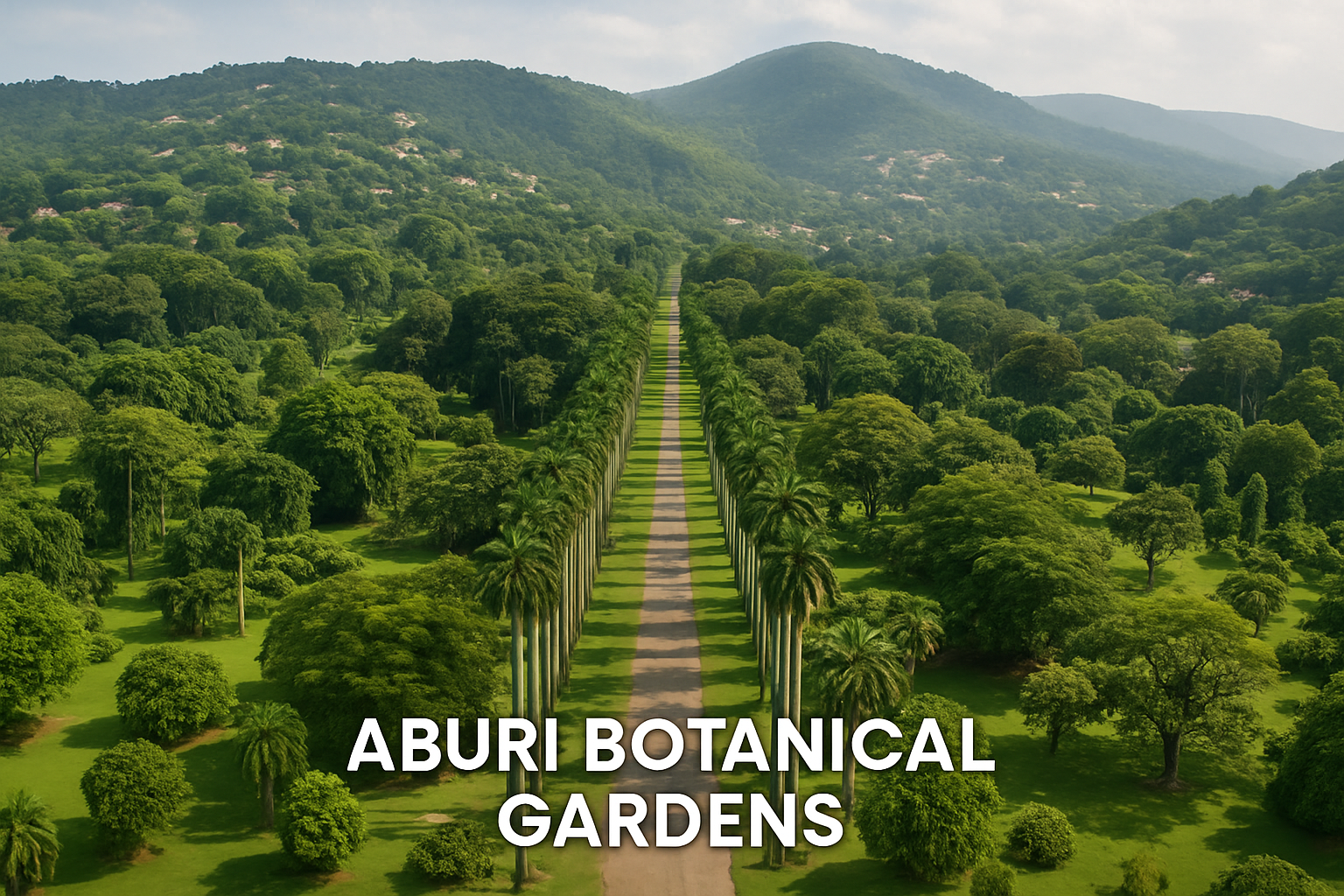
Aburi Botanical Gardens is one of the most accessible ways to experience Ghana’s greener, cooler hill country. Set near Aburi in the Eastern Region, the garden occupies part of the Akuapem Hills, where rising ground, seasonal rainfall and a more temperate-feeling climate create a marked contrast with the busier coastal plain.
The attraction is not simply a collection of labelled plants. It is also a place for an unhurried walk, a change of air and a closer look at how Ghana’s landscapes shift over relatively short distances. The wider Aburi area adds viewpoints, roadside produce, small businesses and quiet hill roads, making the gardens a useful base for a half-day outing rather than a stop to rush through.
Where Aburi Botanical Gardens is and why the setting matters
Aburi Botanical Gardens lies close to Aburi, a hill town in Ghana’s Eastern Region, north of Accra. The approach from the capital climbs towards the Akuapem ridge, and the change in elevation is part of the experience. Temperatures can feel more comfortable than in Accra, especially during a cloudy spell, while the vegetation becomes noticeably more lush during the wetter seasons.
The garden has a long history as a horticultural and botanical site, with its origins dating to the colonial period. Its mature trees and broad layout give it a sense of age that newer recreational spaces do not have. Some visitors come for plant interest; others mainly want a shaded place to walk, take photographs and spend time outdoors without leaving the Accra region.
It is worth separating the gardens from the wider town. The formal garden is the main attraction, but the hill setting is what gives the visit its character. Views can open between trees and buildings, roadside stalls may reflect the local agricultural economy, and the surrounding roads offer a slower rhythm than central Accra.
What to expect inside the gardens
Allow time to walk rather than treating the grounds as a quick photo stop. The appeal lies in the combination of mature vegetation, open lawns, planted areas and winding paths. Depending on the season and the condition of particular sections, the atmosphere may range from bright and spacious to deeply shaded and humid.
Plant life and mature trees
Aburi is known for its varied collection of tropical and ornamental plants, including large trees that create a strong canopy. Plant labels and displays may not always be uniform, so a guided explanation can add value if one is available and arranged through the garden or a local operator. Visitors interested in botany, photography or landscape design should look closely at the scale of the trees and the way the garden uses shade, clearings and paths.
A relaxed walking environment
The grounds suit a gentle exploratory walk more than a tightly scheduled sightseeing circuit. Wear shoes with a reliable grip, particularly after rain, and expect uneven surfaces in places. A hat, drinking water and light clothing are sensible, although a thin outer layer can be useful when the hill weather turns cool or wet.
Photography and quiet observation
The garden offers plenty of natural subjects: trunks, leaves, filtered light, lawns and long perspectives beneath the canopy. Early or later visits can provide softer light, but conditions change quickly in the hills. Be considerate around other visitors, avoid climbing trees or entering planted areas, and ask before photographing people working or trading nearby.
Planning a visit from Accra
Aburi Botanical Gardens works well as a day trip from Accra, but the road journey can take longer than a simple map estimate suggests. Traffic leaving the capital, weekend movement and weather-related delays all affect the timing. Start early if you want a calm visit and time for other stops in the hills.
Check current opening arrangements, admission charges and any guide or event information before travelling. Public details can change, and holiday periods may operate differently from ordinary weekdays. If the gardens are a key part of your day, confirm that they are open before setting out rather than relying on an old blog post or an informal online listing.
Private cars, hired vehicles and taxi arrangements are common ways for visitors to reach the Aburi area, while public transport options may involve changing vehicles and asking locally for the final approach. If you are not familiar with the area, agree the return plan in advance. Mobile coverage, waiting times and available transport can vary once you leave the main road.
When to go
The garden can be visited throughout the year, but the experience changes with the seasons. Rain can make paths slippery and can arrive quickly over the hills, while drier periods may produce brighter walking conditions and clearer views. The greenest appearance is often associated with the wetter months, although individual plant displays and ground conditions vary.
Weekdays are generally better for visitors seeking a quieter walk. Weekends and public holidays can bring more families, groups and photography sessions. A cloudy morning is not necessarily a poor choice: soft light can suit the garden, and the cooler conditions may make walking more comfortable.
Exploring the wider Aburi hill setting
Do not plan the day around the garden alone. The surrounding Aburi area is best approached as a hill-country outing, with time for a meal, a local stop or a scenic drive if conditions and transport allow. Small roadside businesses sell produce and refreshments, but selection and opening times are not guaranteed, so carry water and avoid assuming that every stop will accept electronic payment.
The Akuapem Hills are also a cultural landscape, not just a scenic backdrop. Be respectful in residential areas, ask before photographing people, and remember that farms, compounds and roadside stalls are working spaces. A short conversation with a local guide or business owner can often provide more useful context than trying to identify every plant independently.
For visitors interested in Ghana’s environmental variety, Aburi makes a useful contrast with other parts of the country. Begoro, also in the Eastern Region, offers a different way to think about the region’s forested interior, while Akatsi in the Volta Region belongs to a contrasting lowland setting. Esiama in the Western Region brings a different relationship between settlement, forest and coast. These are not substitutes for Aburi Botanical Gardens, but they show why Ghana should not be reduced to a single landscape type.
How long should you spend there?
For the gardens alone, plan at least two to three hours if you want to walk slowly, pause for photographs and read any available interpretation. Add more time if you are travelling with children, arranging a guide or combining the visit with other hill stops.
A half-day can work for a focused visit from Accra. A full day is more comfortable if you want to avoid rushing, eat locally and allow for traffic on the return journey. An overnight stay in the wider hills may suit travellers who prefer cooler evenings and a slower itinerary, but confirm accommodation availability directly before booking.
Practical tips for a smoother visit
- Wear comfortable walking shoes rather than sandals with a smooth sole.
- Carry water, sun protection and a light rain layer.
- Bring some cash as a backup, even if you expect to pay digitally.
- Confirm opening hours, admission arrangements and access conditions before travelling.
- Keep valuables secure and avoid leaving bags visible in an unattended vehicle.
- Give yourself extra time for traffic, rain and the return journey to Accra.
- Ask permission before photographing people, private property or work areas.
Aburi in a wider Ghana itinerary
Aburi is especially valuable for travellers who want a quick change from the capital without committing to a long intercity journey. It introduces the Eastern Region’s hill character in a manageable way and can help frame later travel to more distant landscapes. A traveller continuing north may eventually compare the green hills with the drier environments around Salaga in the Savannah Region or Jirapa in the Upper West Region; those places require separate planning and should not be treated as extensions of an Aburi day trip.
The same principle applies to locations such as Busunya in the Bono East Region or Bunkpurugu in the North East Region: they belong to different regional settings and travel plans. Mentioning them here is useful only as a reminder of Ghana’s variety, not as a suggestion that they are nearby alternatives. Aburi’s strength is its accessibility, mature garden landscape and close connection to the Akuapem hills.
Is Aburi Botanical Gardens worth visiting?
Yes, particularly if you enjoy gardens, shade, photography and landscapes that feel distinct from Accra without requiring an elaborate expedition. The visit is most rewarding when treated as a gentle hill-country day out rather than a checklist attraction. Allow time, check the practical details, respect the working communities around the site and look beyond the entrance to understand the setting.
Aburi Botanical Gardens is at its best when the garden and the hills are considered together: a historic planted space within a living landscape, reached by a road that gradually changes the pace and atmosphere of the journey.






No one commented yet. Be the first.