
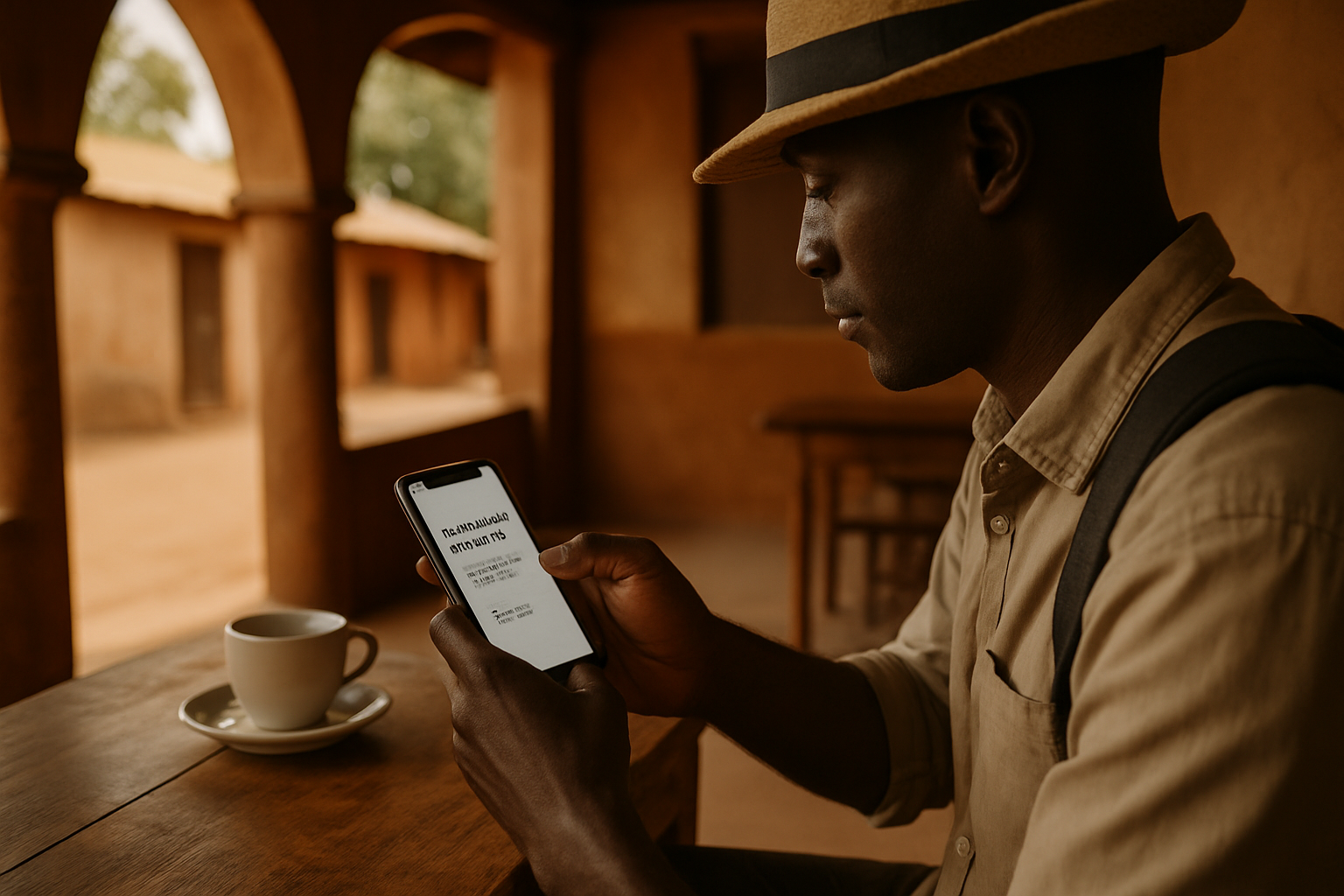
Arranging an adult companion encounter in Bongo is easier when expectations are clear from the beginning. Good escort booking etiquette in Bongo is not about using elaborate language or making assumptions; it is about communicating respectfully, confirming practical details and giving both people room to make informed decisions.
This guide is intended for adults. It focuses on respectful communication, consent, privacy and sensible planning for an encounter in Bongo and the wider Upper East Region. Individual companions set their own terms, and those terms should be treated as part of the booking conversation rather than as obstacles to negotiate away.
Start with a clear and courteous message
A first message should make it easy for the other person to decide whether the arrangement is suitable. Introduce yourself briefly, say that you are enquiring about a booking and include the information needed for a useful reply. A message that is too vague can create unnecessary back-and-forth, while an overly personal or demanding message may be unwelcome.
Useful details may include:
- Your preferred date and a realistic time window.
- Whether you are asking about a private meeting or another agreed setting.
- The general area in Bongo where you would like to meet, without pressing for a private address.
- Any important practical question, such as the expected duration or booking process.
Keep the tone adult, direct and polite. Avoid sending repeated messages when a reply has not arrived, and do not begin with intrusive questions about someone’s private life. If you are using a directory, review the available information first so that your message is relevant rather than asking for details already provided.
For a discreet way to review a profile before making contact, you can browse a current Big Time Ghana profile. Treat any profile as a starting point for communication: confirm the practical details directly and do not assume that information from one booking applies to another.
Confirm the essentials before making plans
Once there is a positive response, confirm the main arrangements in writing. This protects both sides from avoidable misunderstandings and makes it easier to recognise changes before travelling. Keep the discussion focused on the booking rather than turning it into a prolonged negotiation.
Before agreeing, clarify:
- The date and approximate arrival time.
- The length of the meeting and what happens if either person is delayed.
- The agreed fee and how payment will be handled.
- The meeting location or general meeting instructions.
- Any boundaries, conditions or activities that are not part of the arrangement.
- Whether identification, a deposit or another booking step is expected.
Do not treat an agreement as permission to add new requests at the last minute. If your plans change, ask before assuming that the arrangement can be extended, moved or altered. A respectful booking is one where both people understand what has been agreed and can change their minds without pressure.
Consent is ongoing, specific and mutual
Consent should be clear, voluntary and specific to the situation. Agreeing to meet does not automatically mean agreeing to every activity, every length of time or every change in plan. Either person can pause or end the meeting, and a previous agreement does not remove the need to respect a new boundary.
Practical consent etiquette includes asking rather than presuming, accepting a refusal without argument and checking in if circumstances change. Do not use alcohol, drugs, threats, emotional pressure or financial pressure to influence a decision. If someone appears uncomfortable or asks to stop, respect that immediately.
It is also important to distinguish between a question and a demand. You may ask whether something is possible, but the answer may be no. A professional and considerate response is to accept the boundary, decide whether the booking still suits you and move on without insults or repeated persuasion.
Respect boundaries and personal privacy
People offering adult companionship are entitled to personal boundaries, privacy and control over their time. Do not request a home address, private contact details or personal documents unless they are genuinely needed for an agreed safety or booking process. Never share photographs, messages, names, phone numbers or location information with other people without permission.
Photography and recording require explicit permission each time and in advance. Do not assume that a private setting makes recording acceptable. If permission is not clearly given, keep phones and cameras away. The same principle applies to screenshots and online posts: a profile or private conversation is not an invitation to publish or circulate it.
Discretion works both ways. Avoid drawing attention at a meeting point, asking intrusive questions in front of staff or other guests, or discussing someone’s work with acquaintances. Choose a setting where both people can communicate comfortably and leave without unnecessary exposure.
Plan timing realistically in Bongo
Timekeeping is a basic part of escort booking etiquette in Bongo. Build in enough time to travel, find the agreed meeting point and handle unexpected delays. Bongo and nearby communities may involve different travel times depending on where you are coming from, so do not arrange a tightly packed schedule that leaves no room for disruption.
Send a brief update if you are running late, but do not expect an open-ended wait. If you can no longer attend, cancel as early as possible and acknowledge any agreed cancellation terms. Last-minute silence wastes another person’s time and can make future bookings more difficult.
It is sensible to confirm the meeting details shortly before the appointment, particularly if the original plan was made several days earlier. Keep the confirmation concise: repeat the date, time window and agreed meeting instructions, then ask whether everything still works.
Choose a meeting plan that supports safety
Privacy and safety do not have to be opposites. A private arrangement should still include sensible precautions. Share your general plans with a trusted person where appropriate, keep your phone charged and make sure you have a reliable way to leave independently. Avoid surrendering your identification, bank card or phone as a condition of meeting.
For a first meeting, consider an arrangement that allows both people to confirm comfort before proceeding. Follow the agreed venue’s rules, avoid bringing uninvited friends and do not move the meeting to a different location without discussing it first. If a request feels unsafe, confusing or inconsistent with what was agreed, pause and reassess rather than allowing urgency to decide for you.
Be cautious with unexpected payment requests, pressure to send sensitive documents or instructions that keep changing. A legitimate booking conversation should allow reasonable questions. If you are uncomfortable, you can decline politely and stop communicating.
Handle money and changes without pressure
Payment expectations should be discussed before travelling. Confirm the amount, timing and method that both sides have agreed. Do not bargain aggressively, promise payment later without agreement or add conditions after the meeting has started. If there is a deposit or cancellation arrangement, make sure you understand it before committing.
Do not use payment as leverage for activities that were not agreed. Money does not replace consent, and paying for time does not give anyone ownership over another person’s choices. Similarly, a companion is entitled to decline a booking if the circumstances change or a boundary is not respected.
Know when to end the conversation
Not every enquiry will become a booking. The other person may be unavailable, the timing may not work or the requested arrangement may fall outside their boundaries. A simple acknowledgement is enough. Avoid demanding an explanation, sending hostile replies or contacting someone repeatedly through different accounts.
If you decide not to proceed, say so clearly and respectfully. If the conversation becomes uncomfortable, end it and retain only the information needed for your own records or safety. Respectful communication protects your reputation as well as the other person’s privacy.
Final checklist for a respectful booking
- Write a concise, polite first message.
- Confirm date, timing, location instructions, duration and payment expectations.
- Discuss boundaries without treating them as negotiable demands.
- Ask for consent and respect any change of mind.
- Protect private information, images and conversations.
- Allow enough travel time and communicate delays early.
- Keep an independent way to leave and avoid unsafe pressure.
- Cancel promptly if you cannot attend.
The same principles apply whether you are arranging a meeting in Bongo or considering plans elsewhere in Ghana. If you are comparing approaches to communication in another Upper East Region location, read this related guide to escort booking etiquette in Bawku. For a different regional perspective, you can also review the guide to escort booking etiquette in Larabanga.
Clear communication, mutual consent, realistic timing and careful privacy practices make an adult booking more straightforward for everyone. In Bongo, a discreet and respectful approach begins well before the meeting itself: it starts with the first message and continues until both people have safely gone their separate ways.






No one commented yet. Be the first.